
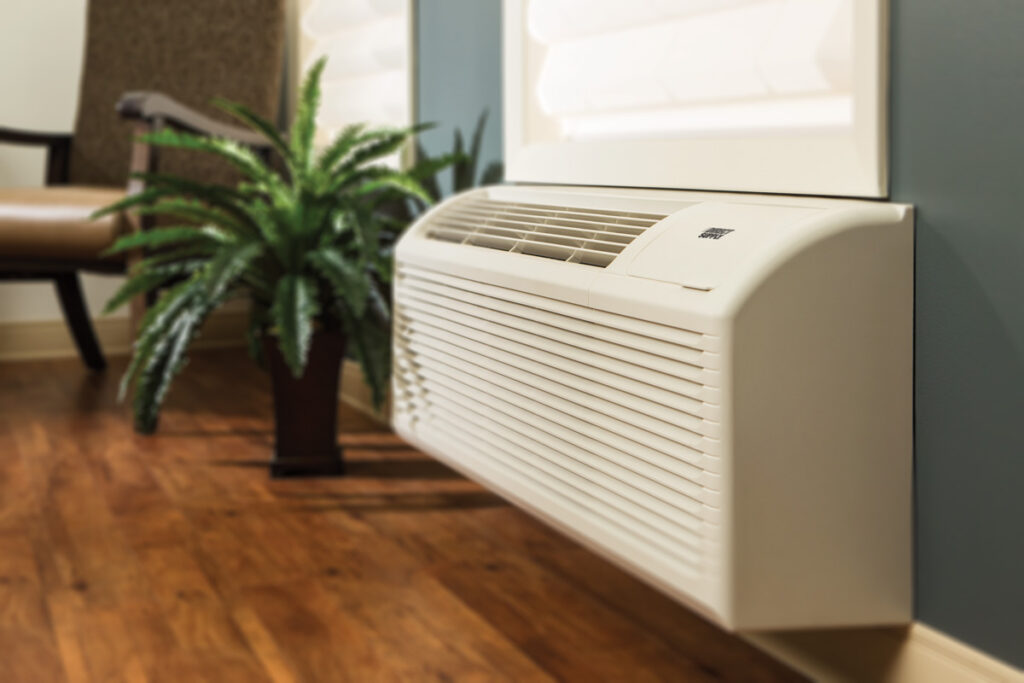
PTAC Units Installation

PTAC Air Conditioner Installation Greater Toronto

PTAC Air Conditioner installed from $19.99 / Month.

PTAC Air Conditioning Units Repair Services

A malfunctioning ptac air conditioners can disrupt comfort and productivity. at Forsaving we offer reliable PTAC repair services across Toronto and the GTA. Specializing in diagnosing and fixing common issues, our expert technicians provide prompt and effective solutions.

Benefits of PTAC Air Conditioner

01

Energy-Efficiency:
Modern ptac ac unit are designed to be energy-efficient, saving costs on your utility bills. This is particularly beneficial in climates like Toronto & GTA where seasonal variations demand regular heating and cooling.

02

Space-Saving:
These units require no ductwork, making them perfect for individual rooms. This feature allows for greater flexibility in room design and usage, providing comfort without compromising on space.

03

Easy Maintenance:
Regular maintenance ensures improved longevity and performance. PTAC units are user-friendly when it comes to routine check-ups, and professional services like those offered by Apex Electric and Mechanical Inc. make it even more hassle-free.

PTAC AC Unit Installation Process

Step 1:
Site Assessment:
Technicians evaluate the space and recommend suitable PTAC models. This assessment includes measuring the room dimensions, assessing insulation, and determining the optimal location for installation.
Step 2:
Custom Installation Plan:
A tailored plan considering specific heating and cooling needs of the space. This customized approach ensures that the unit installed will meet the unique requirements of the space, providing efficient and effective climate control.
Step 3:
Professional Installation:
Ensures secure and efficient setup, adhering to manufacturer guidelines. Proper installation minimizes potential issues and ensures that the PTAC unit operates efficiently and reliably.
Step 4:
Post-Installation Testing:

Comprehensive testing to confirm proper operation and efficiency. This includes checking for leaks, verifying electrical connections, and ensuring the unit cycles correctly through heating and cooling modes.

Energy-Efficient PTAC Air Conditioners

Energy-efficient PTAC units are designed to minimize energy consumption while maximizing comfort. These models often feature advanced technologies like variable speed compressors and programmable thermostats, helping to reduce utility bills.

Customer Success Stories

Frequently asked questions.

What exactly is a PTAC unit and how does it operate?
A ptac ac unit (PTAC) is a self-contained, ductless air conditioning system that heats and cools small areas efficiently. It operates by using a refrigerant or fresh air intake to cool a room, with the option of resistive electric heat or a reverse cycle heat pump for heating. PTAC units are installed flush to the wall, featuring two coils – an evaporator coil that cools the indoor air and a condensing coil that discharges warm air outside.
Selecting the appropriate PTAC unit involves considering the size of the room you wish to heat or cool, as PTACs come in various cooling capacities and sizes. Standardized dimensions typically include 42×16 inches, 36×15 inches, and 40×15 inches. It’s also important to decide between an electric heat model or a heat pump version based on your heating preference. Consulting with a PTAC expert or utilizing a replacement guide can help determine the best fit for your specific installation needs and climate control requirements.
Yes, PTAC units can be operated with on-unit controls, but for enhanced convenience and efficiency, they can also be connected to a wall thermostat. This allows for the installation of programmable controllers and integration with smart home energy management systems, including compatibility with smart thermostats like Nest. Such setups offer users the ability to optimize energy use more effectively and can interact with the power grid for even greater energy savings and customization.
Amana PTAC units are renowned for their energy-efficient performance and advanced features, such as digital controls and high energy efficiency ratios. They are equipped with eco-friendly refrigerants and a two-speed fan motor for optimized comfort. In contrast, Applied Comfort PTAC systems are notable for their customization capabilities, allowing for tailored solutions in aesthetics and functionality. They emphasize noise reduction and air quality enhancements, facilitated through advanced filtration technology and variable fan speeds. Both brands are designed to offer reliable operation, ensuring comfort and efficiency for a wide range of applications.
When selecting a PTAC unit, it’s vital to consider the capacity to ensure that the unit can adequately meet the heating or cooling requirements of the space. Evaluating the unit’s energy efficiency rating is crucial, as this affects long-term operational costs. Noise levels should also be assessed, particularly for installations in hotels or multi-residential buildings, where quiet operation is essential. Additionally, examining the features offered by the brand, such as programmable thermostats and air quality upgrades, can further enhance the comfort and efficiency provided by the unit. Islandaire excels in retrofitting older systems, while McQuay is known for its sophisticated controls and reliability.
PTAC units come primarily in two variants: those with electric resistive heat and those equipped with reverse cycle heat pumps. While all PTAC models feature a cooling function through refrigerant-based or fresh air systems, the heating functionality can vary. Electric resistive heaters use wires to generate heat, similar to a blow dryer, whereas heat pumps provide heating by reversing the air conditioning process, efficiently pulling in warmer air from outside and releasing it indoors.
PTAC units offer significant cost savings by enabling zone-specific heating and cooling, allowing you to control the temperature on a room-by-room basis. This eliminates the need for a larger, more costly central HVAC system to be running continuously. In settings like hotels or apartments, where each room’s climate can be individually adjusted, energy consumption and costs can be significantly reduced. Additionally, PTAC units draw less wattage than traditional electric heaters, especially models with heat pumps, further enhancing energy savings.
While PTAC units provide the convenience of localized heating and cooling, they can draw significant amounts of electricity, especially if used frequently or inefficiently. Opting for a model with a high energy efficiency rating (EER) can lead to long-term savings on energy bills, despite a potentially higher upfront cost. It’s also important to regularly maintain the unit to ensure it operates at peak efficiency, including cleaning or replacing filters and checking for proper insulation and sealing around the installation area.
PTAC heat pumps are engineered to maximize energy efficiency by utilizing heat transfer rather than generating heat through electrical resistance. This method is significantly more efficient, reducing energy costs while providing effective heating and cooling. Islandaire focuses on retrofitting and compatibility, allowing their PTAC units to seamlessly integrate with existing systems, making upgrades economical and efficient. On the other hand, McQuay offers units with notable energy efficiency ratings and programmable features, ensuring they meet the diverse needs of different environments while minimizing operational expenses.
Still looking for another answer?