
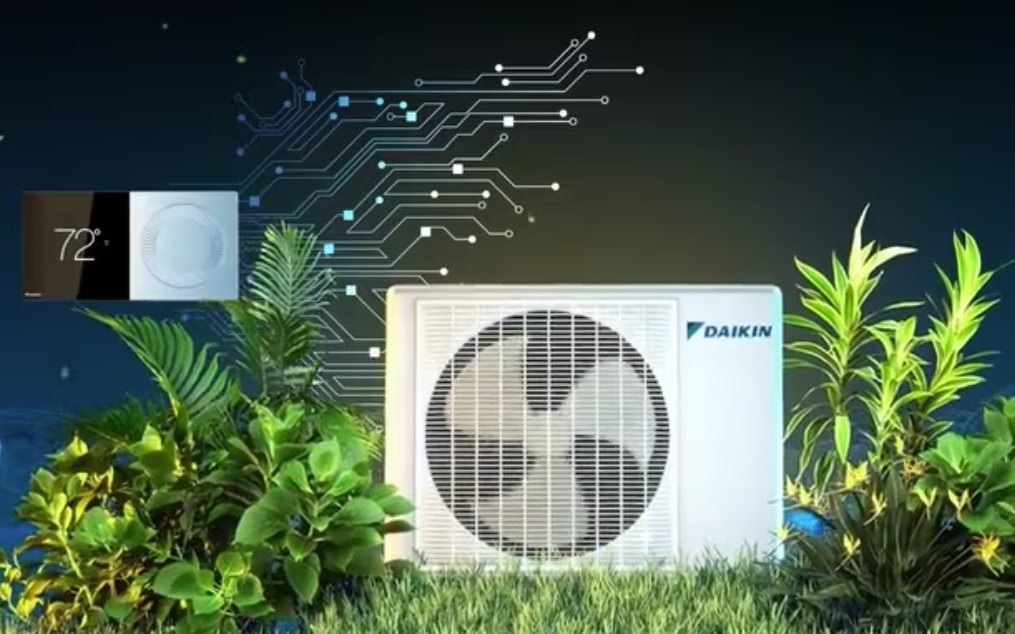
If you have a heat pump system in your home, there is likely an option on your thermostat for “Emergency Heat” or “EM Heat”. You might have thought about whether or not you understand the purpose of this function, or even turned it on hoping it would make your house warmer faster.
Here’s the honest truth: emergency heat is not a turbo boost for cold days. It’s exactly what the name says for emergencies only. Using it incorrectly can send your electricity bill soaring without making your home any warmer.
Let’s break down what emergency heat really is, when you should (and shouldn’t) use it, and how to tell if something else is wrong with your system.
First, a Quick Refresher: How a Heat Pump Works
In contrast to the furnace which uses the burning of fuel to produce heat, a heat pump transfers heat from one location to another. During the cold season, the heat pump transfers heat from outdoor air (even when it’s cold), and transfers the heat inside your house. When the seasons change, the heat pump works the other way round to cool your house.
The beauty about heat pumps is that they are very efficient, giving you between two to four times more energy than the amount of energy used by the device. However, heat becomes limited when temperatures are too cold outside, hence the need for a backup system.
Auxiliary Heat vs. Emergency Heat: What’s the Difference?
This is where most homeowners get confused. Your heat pump actually has two types of backup heat, and they work very differently.
Auxiliary Heat (“Aux Heat”)
- How it works: Supplements your heat pump when it needs a boost. The heat pump continues running, and the backup heat (usually electric resistance coils or a gas furnace) kicks in to help.
- When it activates: Automatically, when outdoor temperatures drop very low or when your thermostat demands a rapid temperature increase.
- Do you need to turn it on? No. Your system handles this automatically. Just leave your thermostat on regular “Heat” mode.
Emergency Heat (“EM Heat”)
- How it works: Completely shuts off your heat pump and runs only on the backup heating source. The heat pump compressor stops entirely.
- When it activates: Manually only. You must flip the switch on your thermostat.
- Do you need to turn it on? Only in genuine emergencies, like when your heat pump is broken, iced over, or not working at all.
Here’s the key takeaway: Auxiliary heat works with your heat pump. Emergency heat works instead of your heat pump.
When Should You Actually Use Emergency Heat?
The short answer: almost never.
According to HVAC experts, emergency heat should only be used in two specific scenarios:
- Your heat pump is malfunctioning. If the outdoor component isn’t working, or if it is working yet isn’t able to keep your house heated, then you should set it to use emergency heat until your problem gets resolved.
- The outdoor unit is fully frozen or buried under snow. If your heat pump has been damaged due to an ice storm, turning on your emergency heat mode will help you stay warm while allowing your outdoor unit to turn off.
What emergency heat is NOT for:
- ❌ “It’s really cold outside today”
- ❌ “My house feels chilly”
- ❌ “I want to warm up faster”
- ❌ “My heat pump seems to be running a lot”
Using emergency heat unnecessarily disables your heat pump’s efficient operation and forces your system to rely entirely on expensive backup heat.
If you suspect your system needs professional attention, Heat Pump Repair in GTA can help diagnose the issue before you end up relying on emergency heat longer than necessary.
The Real Cost of Emergency Heat
Here’s why experts warn against flipping that switch casually. Emergency heat is much more expensive to run than your heat pump.
Heating Mode | Typical Operating Cost | Efficiency |
Normal heat pump mode | ~$0.12 – $0.15 per hour | High (300–400% efficient) |
Emergency heat mode | ~$0.40 – $0.60 per hour | Low (100% efficient at best) |
As a way of comparison, operating your heat pump for a week may run you something like $30. Operating your emergency heat for a week, on the other hand, could cost you **at least $200**. Depending on the number of winters, using emergency heat could make you pay an additional $400 to $800.
Some experts warn that unnecessary emergency heat use can triple your heating bills. That’s not a typo.
What About My Thermostat’s “Aux Heat” Light?
If you see “Aux Heat” or a similar indicator on your thermostat, don’t panic. That’s usually normal during very cold weather.
Auxiliary heat activates automatically when:
- Outdoor temperatures drop below freezing
- Your thermostat calls for a rapid temperature increase (like when you wake up)
- The heat pump is in defrost mode (which happens periodically to clear frost from the outdoor unit)
This is your system working exactly as designed. You don’t need to do anything.
But if you get an indication on your screen of “EM Heat” or “Emergency Heat” but didn’t set it to that, then there may be a problem. This may show that your thermostat is incorrectly configured into emergency mode or that your heat pump cannot provide enough heat.
Regular maintenance helps prevent unexpected issues. Professional Air Conditioner repair & maintenance services (which apply to heat pumps as well) can catch small problems before they become expensive emergencies.
Quick Troubleshooting: What to Check Before Calling Emergency Heat
If your home feels cold and you’re tempted to flip the emergency heat switch, try these steps first:
- Check your thermostat settings. Make sure it’s set to “Heat,” not “Cool” or “Off.” Verify the fan is set to “Auto,” not “On.”
- Check your air filter. A clogged filter reduces airflow, forcing your system to work harder and potentially trigger auxiliary heat unnecessarily.
- Check the outdoor unit. Is it buried in snow or ice? Gently clear away any debris. Is the fan running? If the outdoor unit is completely still while the thermostat calls for heat, something may be wrong.
- Reset the system. Turn the thermostat off, wait 5–10 minutes, then turn it back on. This can clear minor control glitches.
- Check your circuit breaker. Emergency heat systems draw significant power. A tripped breaker can disable your backup heat entirely.
In case all the measures listed above do not help to solve the problem, and your house remains cold, then the best thing to do would be to turn on the emergency heating and contact the experts.
A proper installation will definitely save one from most of these problems. In case you need to buy a new air conditioning unit or upgrade the existing one, you may contact AC installation services.Summary: Emergency Heat at a Glance
Question | Answer |
What does emergency heat do? | Shuts off the heat pump and runs only on expensive backup heat |
When should I use it? | Only when the heat pump is broken or iced over |
When should I NOT use it? | Never just because it’s cold outside |
Will it warm my home faster? | Yes, but at 2–4x the cost |
Is it safe to run for long periods? | No, it strains components and drives up bills |
What if my thermostat shows “Aux Heat”? | That’s normal during cold weather |
The Bottom Line
Emergency heat is a safety net, not a comfort setting. Think of it like the spare tire in your car, you’re glad it’s there when you need it, but you wouldn’t drive on it every day.
Your heat pump is designed to handle cold weather efficiently, especially modern cold-climate models. Let it do its job. Trust the automatic auxiliary heat system to kick in when truly needed. And save that emergency switch for, well, actual emergencies.
If you keep relying on your emergency heat too much during one season of winter, then there must be another factor that needs to be dealt with, whether it be maintenance, the size of the system, or just a lack of knowledge about how it works.
Stay warm, stay smart, and keep an eye on that thermostat.
FAQs
Q: What is the difference between emergency heat and regular heat?
A: Regular heat is your heat pump’s main heating method, whereas emergency heat serves as a backup method during harsh cold weather or when the heat pump cannot meet the set temperature requirements.
Q: How often should I service my heat pump?
A: Service your heat pump annually in order to keep it working efficiently and spot problems beforehand.
Q: Can I manually switch to emergency heat?
A: Yes, most manufacturers give users the option to use emergency heat manually when required.
Q: Are Daikin Heat Pumps suitable for Toronto’s climate?
A: Indeed, Daikin Heat Pumps have been developed with different climates in mind and work well in Toronto’s winter conditions.
Q: How can I improve the efficiency of my heat pump?
A: Annual servicing, filter replacement/cleaning, and proper thermostat adjustment may prove to be effective measures.